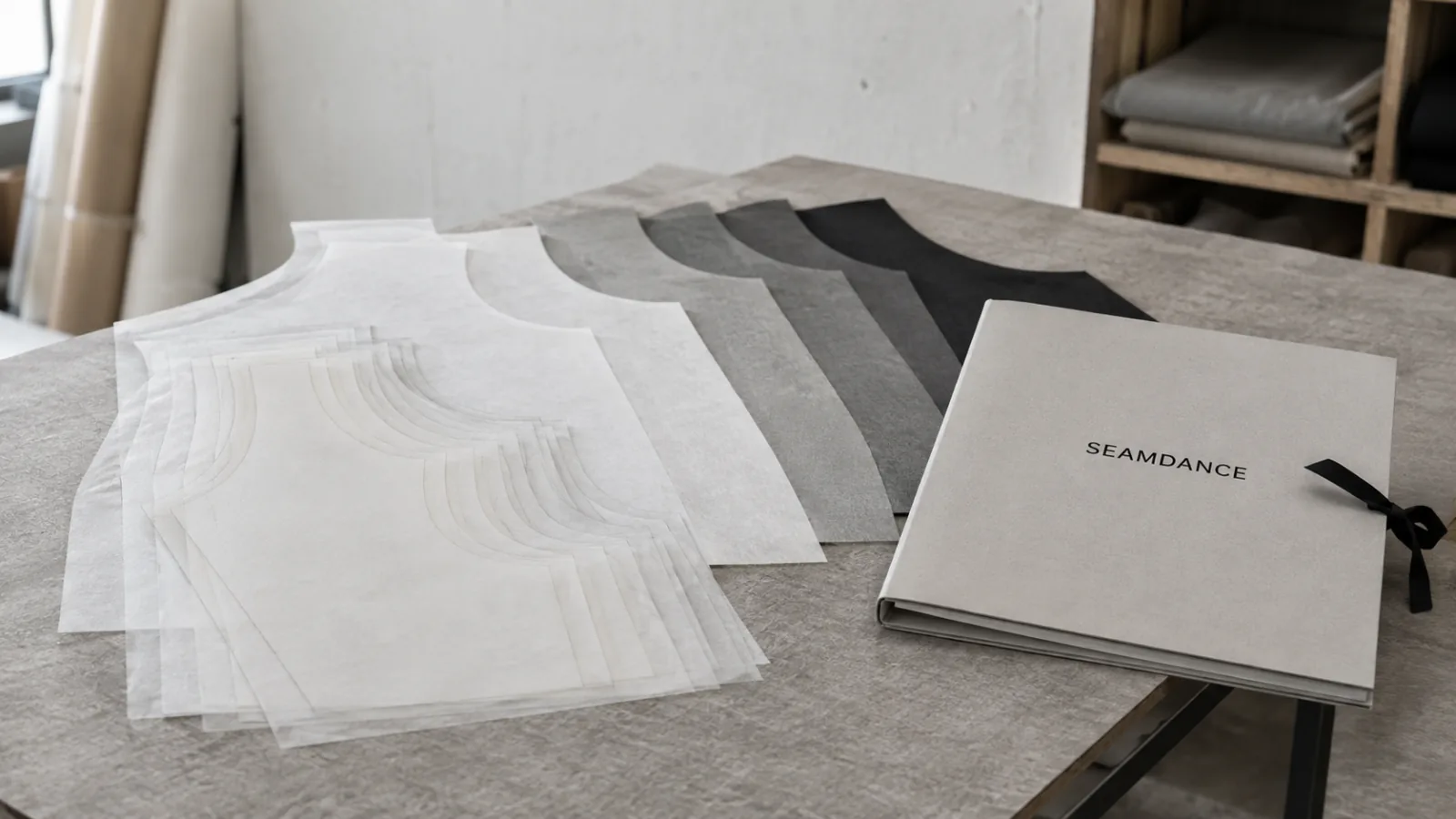
Grading stretch garments is not scaling a drawing — body proportions change shape as sizes extend, and stretch fabric hides mistakes until the customer moves. Here is what buyers should demand from a size set.
The short answer
- Grading stretch garments is not linear scaling — proportions change shape as sizes extend.
- Fit the block on your target body, then review a full size-set sample in movement, not on a table.
- Extended sizing needs its own grade rules and sometimes different elastics — not just bigger numbers.
- A published size chart that matches the actual grade is the cheapest returns reducer.
Grading stretch is different
Woven grading adds fixed increments per size. Stretch grading must decide how much of the body change the fabric absorbs and how much the pattern absorbs — the reduction percentage itself can change across the range. Keeping one reduction from XS to 4X produces leggings that strangle at one end or sag at the other.
Rise, waist placement and inseam proportions also shift: a 4X body is not an XS body multiplied. Ask whether the grade rule adjusts rise and reduction across the range, not just widths.
Inclusive sizing that actually fits
Extending to 3X–4X honestly requires fit models or scan data at those sizes and often a second block — premium brands frequently run a separate extended-size block with its own reduction and rise logic. “Grade it up” is how brands end up with extended sizes that technically exist but do not sell twice.
Waistband engineering deserves special attention at extended sizes: pressure distribution and band width may need to change so hold does not become digging.
What to check on a size-set sample
Order a size set (every size, one style) before bulk on a new block. Check three things per size: the garment measurement against the graded spec, the fit on a body or form of that size, and the behavior points — squat opacity, band hold — which can pass in M and fail in XL.
Record wash-and-wear on at least the base size and one extended size. Recovery differences across sizes reveal reduction problems early.
Size charts and returns
The published size chart must come from the graded spec, not marketing. Cross-brand vanity sizing is a returns machine in activewear because stretch invites customers to size down. State body measurements, not garment measurements, and keep them consistent across the collection.
At SEAMDANCE, graded specs travel with the sealed sample into bulk, and final inspection to AQL 2.5 measures garments against that spec — so the chart the customer reads matches the garment in the bag.
Quick answers
How many sizes should a first collection run?
Most new labels launch XS–XL (five sizes) and extend after sales data. Launching 4X from day one is a genuine commitment — do it with a proper extended block, or wait until you can.
What is a size set and when do I need one?
One sample of every size in a style. Order it for any new block or any new factory, before bulk — it is the cheapest insurance against graded-fit surprises.
Sourcing styles for your line? The 2026 catalogue lists every ready-to-develop style — colorways, materials, quote list built in.