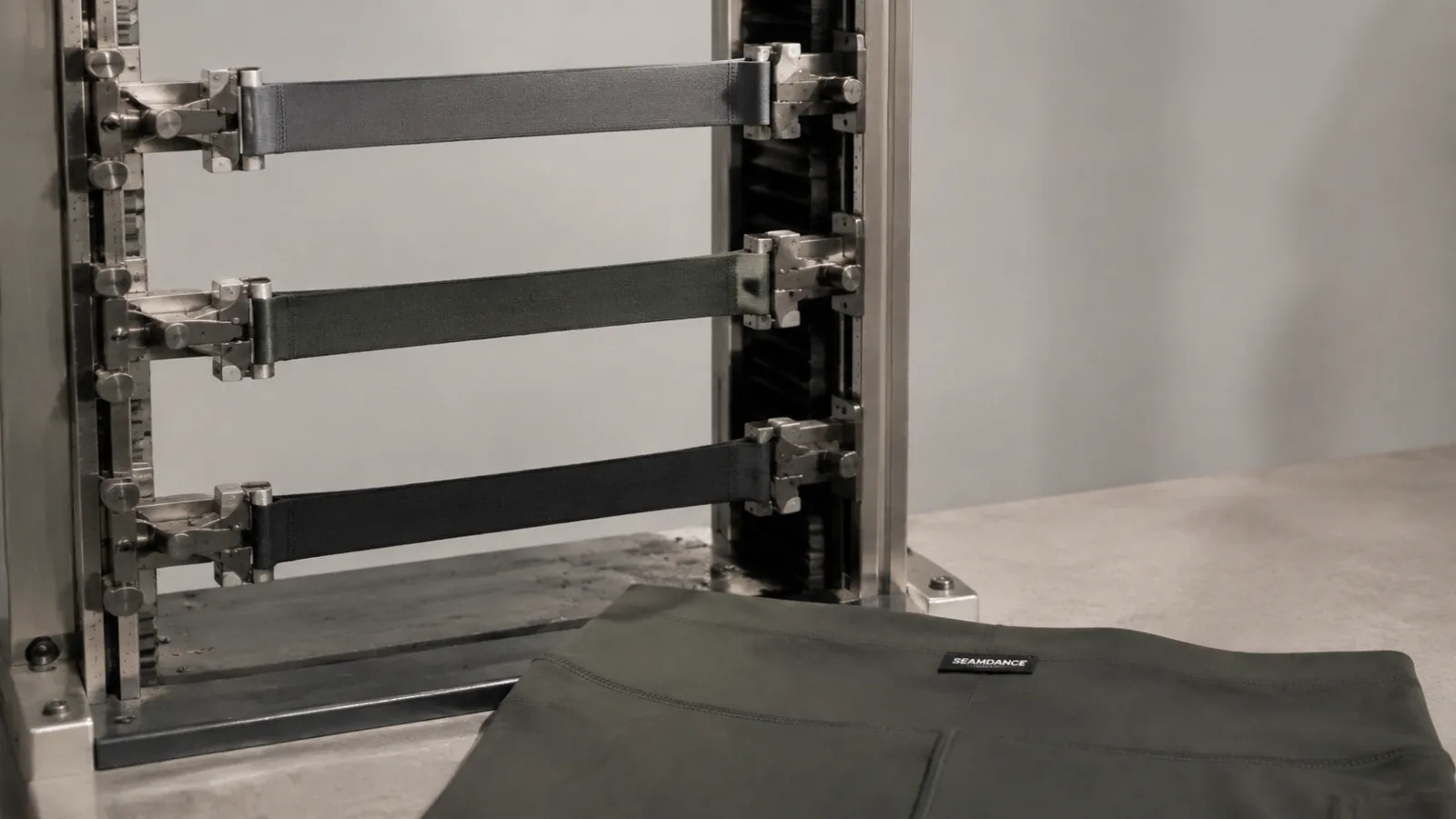
Most legging complaints — see-through fabric, sliding waistbands, bagging knees — trace back to one early decision: the compression level. A squat test is where that decision is proven or exposed. Here is what the test should actually tell you, and how to brief it.
Compression is a spec, not a feeling
Buyers often brief compression as a mood: “sculpting”, “buttery”, “second skin”. A sample room cannot sew a mood. Compression is produced by the interaction of fabric modulus (how hard the fabric pulls back), garment reduction (how much smaller the pattern is than the body) and knit structure. The same fabric cut with 12% reduction and 18% reduction produces two different products.
In development, ask your partner to state the reduction percentage and the fabric's stretch and recovery figures alongside the sample. When those numbers are on record, a fit comment like “looser through the thigh” becomes an instruction the pattern team can execute precisely.
The squat test: four things to watch
Opacity under load. Have the wearer squat with light behind them and photograph the seat panel. Fabric that measures opaque on the table can whiten when stretched 60–80% over the seat. If it whitens, the answer is usually higher density or a knit-structure change, not just heavier weight.
Waistband hold. The waistband should not fold or migrate through three consecutive squats. Watch the top edge: folding means the band elastic or self-fabric channel is mismatched to the rise. Seam behavior and recovery come last: seams should not shift sideways over the hip, and the knee and seat should snap back rather than pouch when the wearer stands.
Match compression to the end use
Studio yoga favors light-to-medium compression with high recovery — the customer sits, folds and inverts, so comfort at the waistband matters more than muscle containment. Training and running favor medium-to-firm compression with stronger modulus fabrics that stabilize during impact.
A common mistake is briefing one legging to do both jobs. If your line serves both customers, develop two blocks and share the waistband construction between them. Two focused products outsell one compromised product.
How to brief it in production terms
State the end use, the target compression (light, medium, firm), the opacity requirement (“pass squat test in white under studio light”) and the recovery expectation. Ask for the squat test on video with every fit sample — at SEAMDANCE we film prototype and pre-production samples so the approval is documented, not remembered.
When compression level is fixed early, sampling gets faster: our stock-program fit samples ship in 3–4 days and custom first samples normally land in 7, because the fabric and reduction targets are already agreed.
Quick answers
How many squats should a fit test include?
Three slow, full-depth squats minimum, filmed from the back and side with backlight. One squat hides recovery problems; three reveal waistband migration and seat whitening.
Does higher gsm always mean more squat-proof?
No. Opacity comes from knit density, yarn choice and dye depth as much as weight. A dense 240 gsm knit can out-perform a loose 280 gsm one. Test the actual fabric under stretch.
Compression fabric power and pattern reduction developed together, per style.
Open the programSourcing styles for your line? The 2026 catalogue lists every ready-to-develop style — colorways, materials, quote list built in.