You cannot negotiate well against a cost structure you cannot see. Here is roughly where the money in an activewear garment goes, which levers genuinely move price, and why the cheapest quote is often the most expensive decision.
Where the money goes
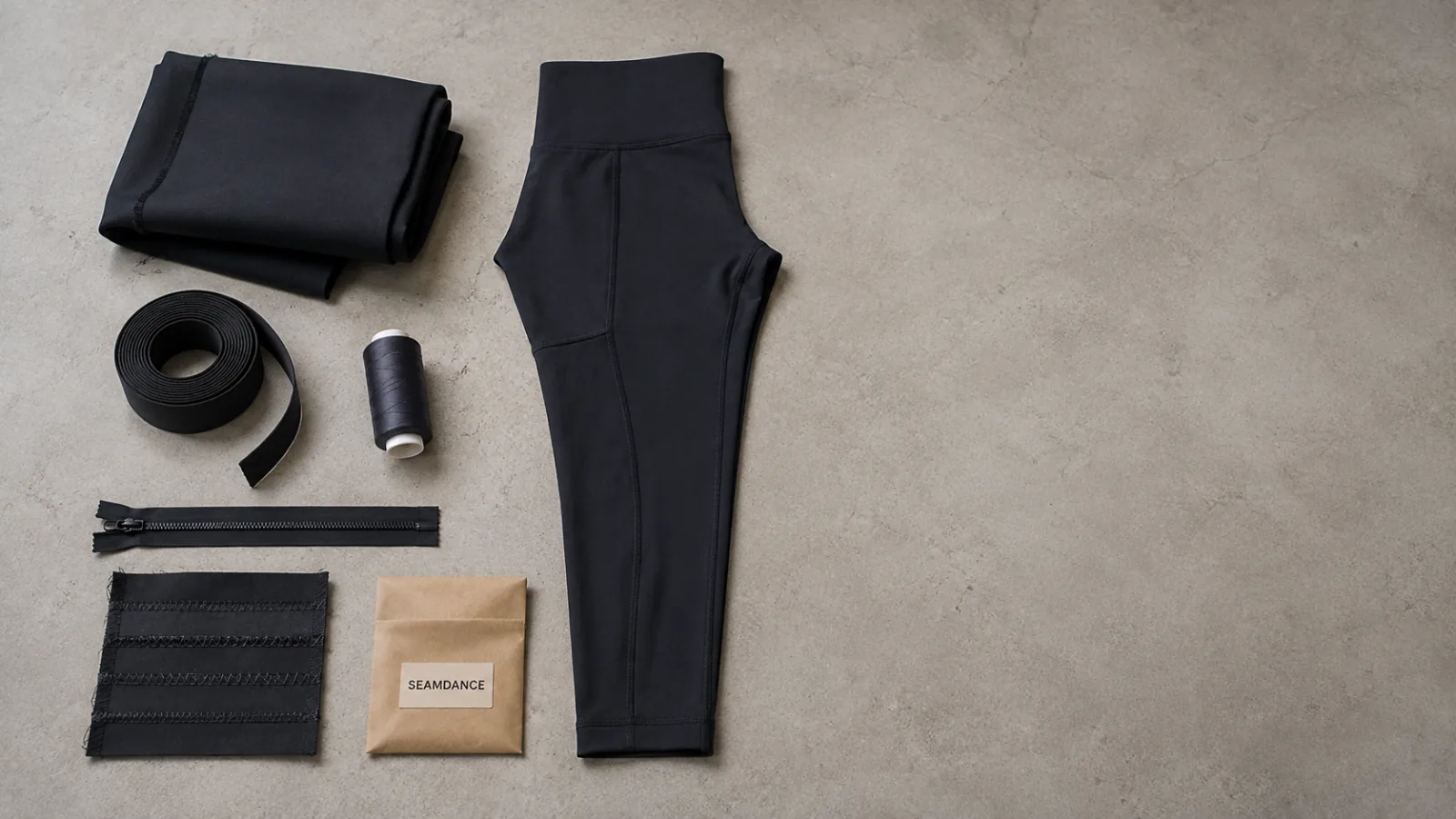
For a typical performance legging, fabric is the dominant cost — commonly around half the ex-factory price once you include the spandex content and dyeing. Labor (cutting, sewing, finishing) is the next block, scaling with construction complexity: every panel, pocket and coverstitch detail is minutes on a machine. Trims, packaging, testing, overhead and margin fill the rest.
This is why two quotes for “the same legging” can differ 40%: they are rarely the same fabric, the same construction count, or the same inspection standard. Compare quotes only at equal specification.
Levers that move price honestly
Design-side: fewer panels and construction details, shared fabrics across styles, standing colors instead of custom dyeing, simpler branding methods. Order-side: consolidated colorways (fabric lot efficiency), realistic delivery windows (no air freight, no overtime), staged programs that let a partner plan capacity.
Each of these reduces real cost, so the price move is durable. A good partner will walk the cost build-up with you — at SEAMDANCE, quotations return within 24 hours with the quantity and spec assumptions stated, so the comparison is honest.
Discounts that should scare you
A price 25% under the credible field, at equal claimed spec, has to come from somewhere invisible: fabric substitution (the classic), skipped testing, unpaid or subcontracted labor, or a bait price that grows back via “fabric price increases” after you are committed.
The tell is what happens under specificity: ask for the fabric composition and weight in writing, the inspection standard, and the remedy terms for defects. Watch the price quietly climb back toward the field — or the answers blur.
Negotiate the relationship, not just the unit
The strongest pricing comes from being a good customer: consolidated decisions, fast approvals, forecast visibility, repeat programs. Suppliers price risk; predictable buyers cost less to serve and it shows in year-two pricing.
Push hardest on the terms that protect you at equal price: locked fabric spec per lot, AQL 2.5 inspection, on-time commitment with a stated remedy. A dollar saved on unit price is erased by one failed delivery; 98% on-time across a network is itself a price term.
Quick answers
Why do quotes vary so much between suppliers?
Because the products quietly differ: fabric grade, construction count, inspection level, and who bears defect risk. Fix the spec in writing first; then quotes become comparable and the spread shrinks.
Is it rude to ask for a cost breakdown?
No — it is professional, within reason. Fabric consumption and price, labor complexity and trims can be discussed openly. Expect a partner to protect exact margin, and distrust one who claims to have none.
Sourcing styles for your line? The 2026 catalogue lists every ready-to-develop style — colorways, materials, quote list built in.