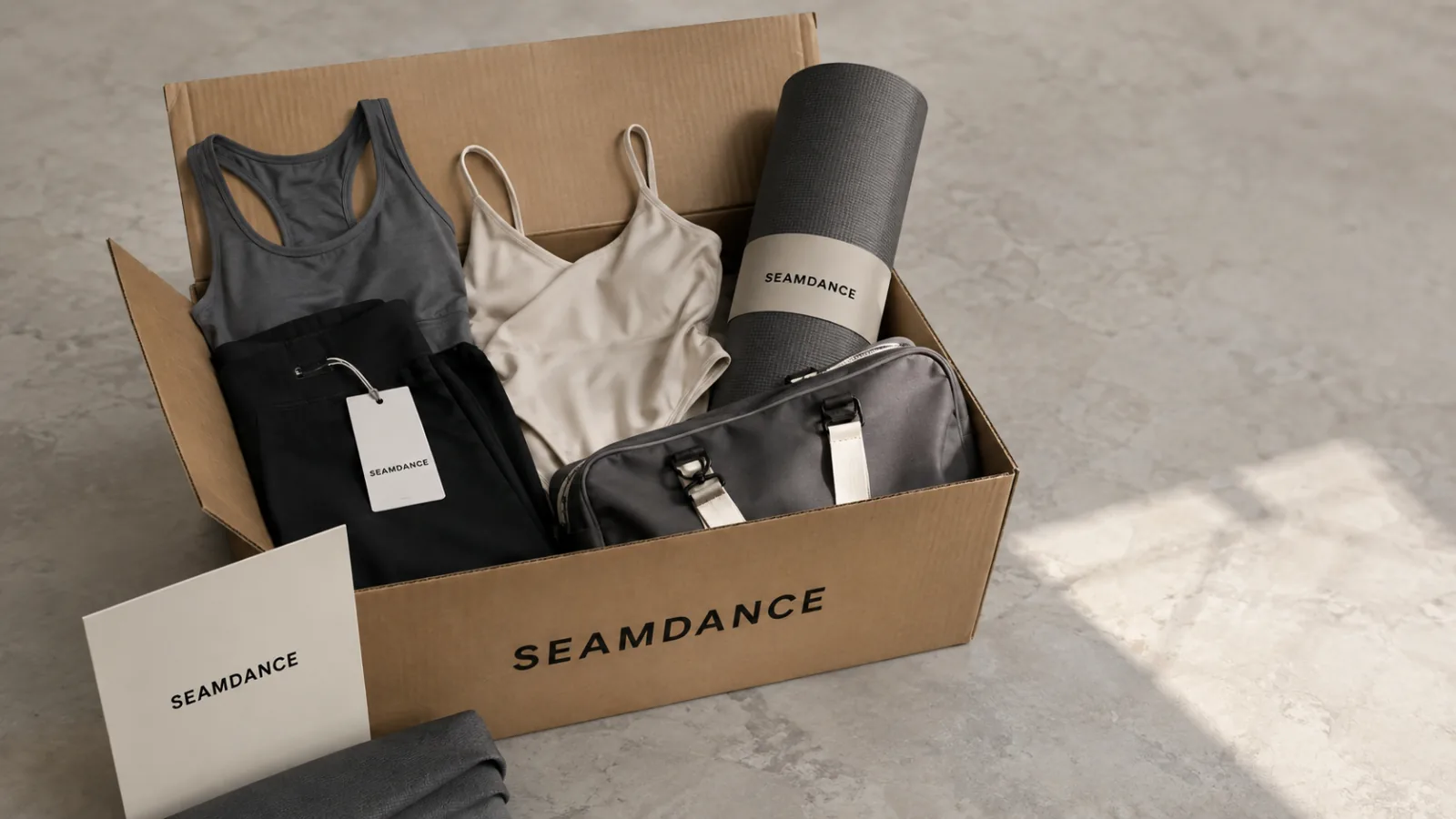
The moment a brand grows past leggings — into swim, menswear, bags, mats — the sourcing model breaks: no single factory makes that range well. The choice becomes managing four suppliers yourself, or consolidating under one managed route. Here is how the second option actually works.
Why one factory cannot do it all
Apparel knits, swimwear, bags and yoga mats are different industries wearing the same storefront: different machinery (circular knitting vs bartack-heavy bag lines vs mat molding), different materials (chlorine-resistant swim fabrics, webbing and foam, TPE and rubber), different testing, often different cities.
A factory that claims all of them in-house is usually subcontracting most — you get one invoice and zero visibility. The honest structures are: multiple direct suppliers, or one managed network that is open about being a network.
What managing it yourself really costs
Per additional supplier: separate vetting and audits, separate sampling loops, separate QC scheduling, separate shipping and paperwork, separate defect negotiations. Founders describe the same arc — sourcing quietly becomes the day job, and brand work (product, content, customers) gets the leftovers.
The money cost hides in fragmentation too: four LCL shipments instead of one consolidated container, four minimum-charge inspections, four sets of banking fees.
How consolidation works in practice
Each category is placed with a specialist partner — the seamless mill for leggings, the swim specialist for chlorine-safe capsules, the bag line for carriers, the mat plant for accessories. One project team holds the whole brief: coordinated colors and branding across categories, one approval calendar, one quality standard enforced by the manager's own QC (at SEAMDANCE, final inspection to AQL 2.5 in every facility).
Then logistics converge: production timed to consolidate, mixed-category shipments in one container, one set of export documents. Stock-program categories can ride along from 100 pieces, so accessories and add-ons do not need their own scary minimums.
When consolidation is the wrong choice
If you are single-category at high volume, direct is fine — consolidation earns nothing. If your categories each justify a dedicated vendor team, you have in-housed the function already.
The fit is the multi-category brand between those poles: real range, finite team. One of our longest-running client relationships began exactly there — a founder running menswear, womenswear, swim, bags and mats across several unrelated factories, spending his week chasing suppliers. Consolidated, the sourcing hours went back into the brand, and growth followed the attention.
Quick answers
Does consolidation mean one invoice and one contract?
Typically yes — one commercial relationship, one delivery plan, with facility-level transparency per category retained: you still know which specialist makes what, and can audit them.
Can categories ship together from different cities?
Yes — production is scheduled to converge, goods consolidate at origin, and mixed cartons or mixed pallets load as one shipment. That single container is often the largest hidden saving of the model.
Sourcing styles for your line? The 2026 catalogue lists every ready-to-develop style — colorways, materials, quote list built in.