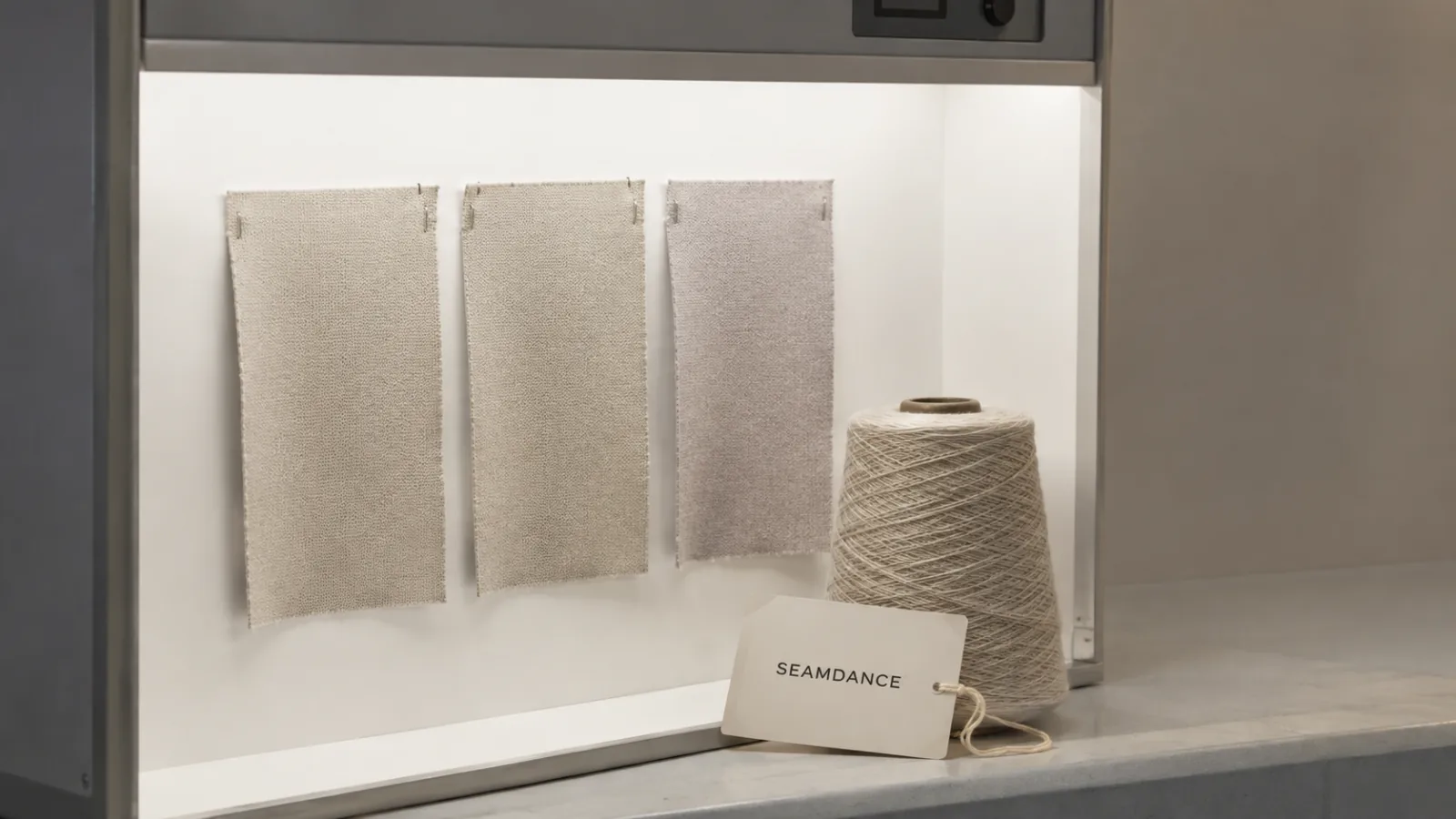
Color is the first thing a customer sees and the easiest thing to get subtly wrong. The tools — Pantone standards, lab dips, light boxes — are simple; the discipline of using them per fabric and per lot is what separates coherent collections from mismatched sets.
The short answer
- The same Pantone reference lands differently on every fabric — approve lab dips per material, side by side.
- Approve under fixed lighting; “looks right on my screen” is how sets stop matching.
- The approved dip becomes the reorder reference, so batch two matches batch one.
- Sets and multi-factory programs approve colors together, not per factory.
Why the same color goes wrong
Screens lie (RGB is not fabric), fibers differ (nylon and polyester take the same recipe differently), surfaces differ (brushed scatters light and mutes shade), and light sources differ — the phenomenon where two fabrics match in daylight and split under store lighting is metamerism, and sets are its favorite victim.
This is why a legging and bra in “the same” color from two mills can visibly mismatch as an outfit. Color must be approved per fabric base, and matching-set fabrics approved together.
The lab dip process
A lab dip is a small dyeing of your actual fabric to hit a physical standard (Pantone TCX chip or your master swatch). The mill submits options — commonly two or three variants — and you approve one under agreed lighting: D65 daylight plus a store source is the practical pair, in a light box, not by a window.
Approve physically, sign and split the dip: one copy to the mill, one retained. Digital photos of lab dips are for conversation, never for approval.
From approval to bulk — and reorders
Bulk dye lots are checked against the approved dip, visually under the same lighting and, for exacting programs, instrumentally (spectrophotometer ΔE tolerance). Small lot-to-lot drift is physics; the tolerance and the check keep it invisible to customers.
Reorders are where discipline pays: the approved standard and dip on file mean color continuity across months and mills. At SEAMDANCE, color standards are retained per program and re-verified per production lot, so a customer's third purchase matches her first.
Building a color-smart collection
Core colors that repeat across seasons amortize their approval work; fashion shades rotate on top. Fewer custom colors per season also means friendlier fabric minimums — each custom shade carries its own dye-lot minimum.
Choose shades from physical chip books, approve sets together, and give black its respect: 'black' is a family of blacks, and mixed blacks in one outfit read cheap instantly.
Quick answers
How long do lab dips take?
Commonly one to two weeks including courier legs, run in parallel with block and fit work so they rarely gate the program. Custom colors on custom fabric add the knit-and-dye calendar — plan them earliest.
What ΔE tolerance should I set?
Exacting apparel programs commonly work around ΔE ≤ 1.0–1.5 against the standard, judged with agreed illuminants. Set it per program — tighter costs more; looser risks visible drift on sets.
Sourcing styles for your line? The 2026 catalogue lists every ready-to-develop style — colorways, materials, quote list built in.