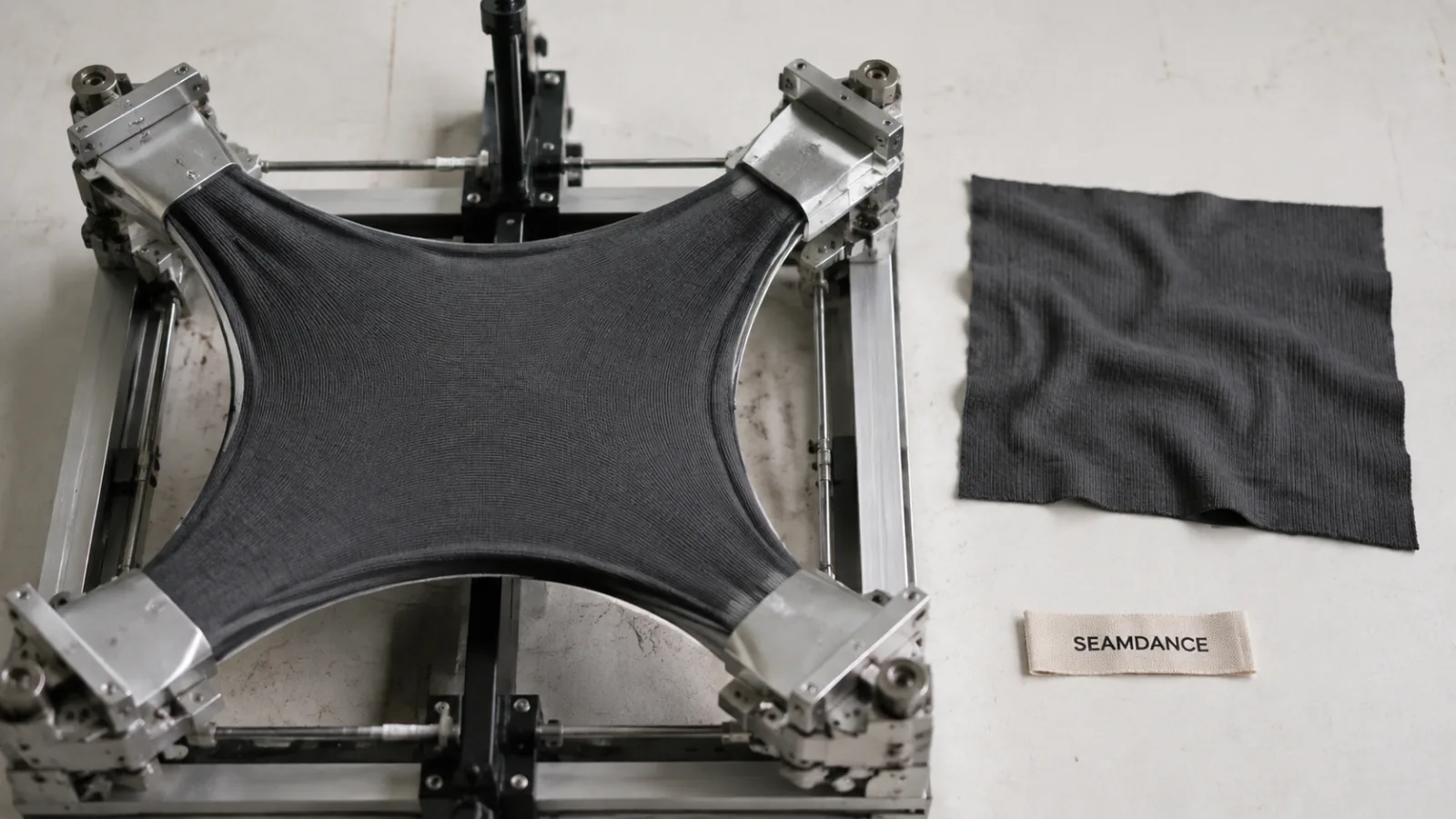
Every supplier says “four-way stretch”. The number that separates a legging that lasts two years from one that bags in two months is recovery — and it is measurable before you approve anything.
Stretch: the easy half
Four-way stretch means the fabric extends both lengthwise and crosswise — table stakes for any legging knit with spandex. The useful figures are the stretch percentages in each direction at a defined force: a legging fabric might stretch 120–160% crosswise and somewhat less lengthwise.
Direction matters in pattern making: the higher-stretch direction usually runs around the body. A mill's stretch report tells the pattern team what reduction the fabric can support.
Recovery: the number that predicts aging
Recovery measures how completely fabric returns after being held stretched — reported as growth (residual extension) after a standard hold-and-release cycle. Low growth means the knee and seat snap back; high growth means pouching, bagging and that “worn out” look.
Crucially, test recovery after wash cycles, not just off the roll. Heat, detergent and time attack spandex; a fabric that recovers beautifully new and poorly after 20 washes is a warranty problem in advance. Ask for washed recovery data or run the test during development.
What drives good recovery
Spandex quality and percentage, how the spandex is plated into the knit, yarn tension in knitting and heat-setting during finishing all matter. Branded spandex tends to hold recovery longer over wash life than commodity equivalents — sometimes worth the premium for a hero product.
Garment care instructions protect recovery too: high-heat drying is the quiet killer of spandex. Say so on the care label.
Specifying and enforcing it
Put stretch range and maximum growth into the fabric spec with the test method named, and make it part of the approval documents. Then enforcement is possible: at SEAMDANCE, bulk fabric lots are checked against the approved spec before cutting or knitting, and garment behavior is re-verified at AQL 2.5 final inspection.
Without a written number, “the fabric feels different this time” is an argument. With one, it is a rejected lot.
Quick answers
What growth percentage is acceptable for leggings?
Premium legging developers commonly target low single-digit growth after the standard stretch-hold test on washed fabric. The exact target depends on test method and end use — fix it per fabric with your development partner and hold every lot to it.
Why did my leggings bag only at the knees?
Knees combine the highest repeated strain with the least fabric support. It is where marginal recovery shows first — which is why fit tests include repeated squats and wear trials, not just a mirror check.
Sourcing styles for your line? The 2026 catalogue lists every ready-to-develop style — colorways, materials, quote list built in.