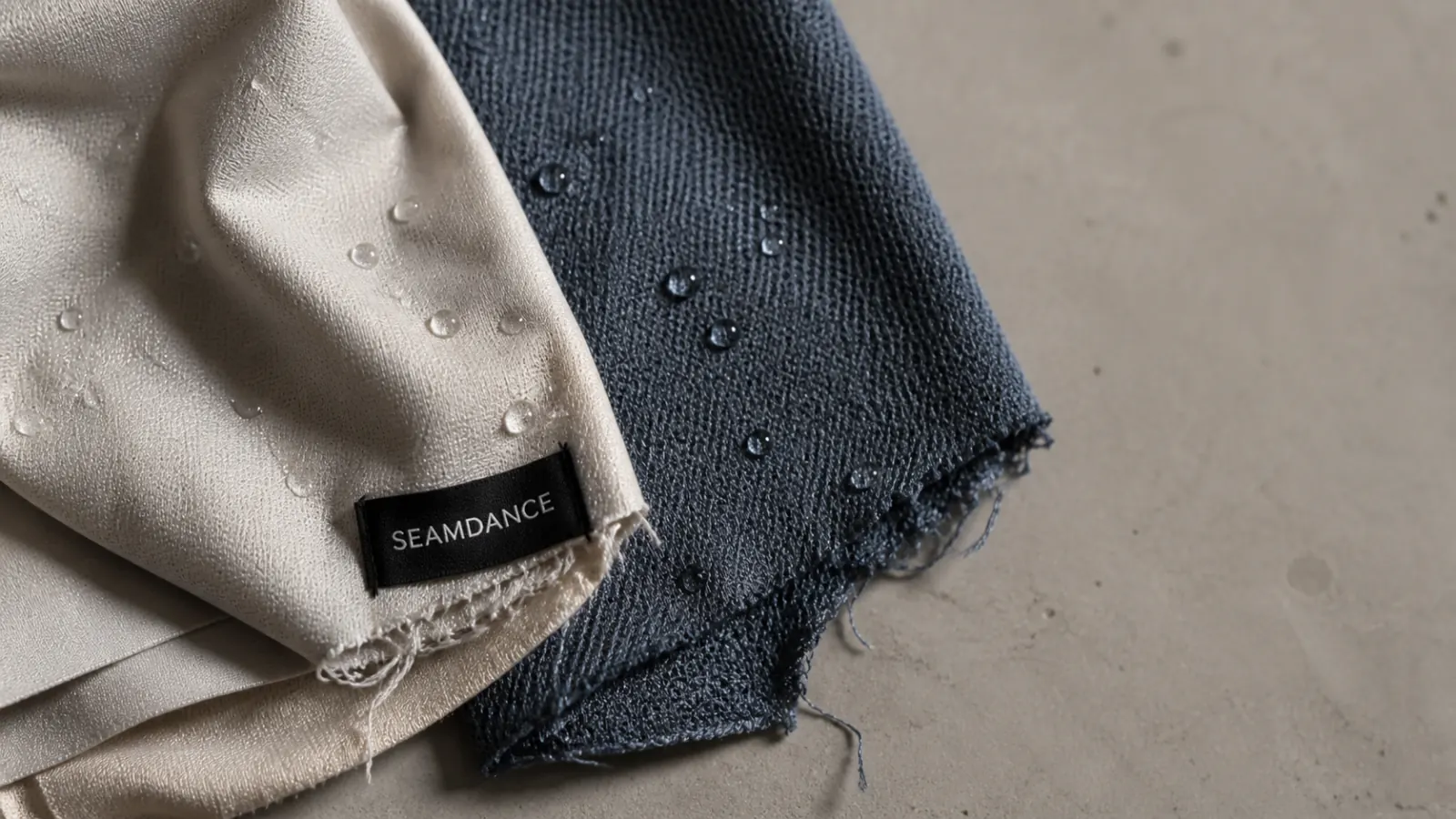
Almost every legging on the market is nylon/spandex or polyester/spandex. Both can be excellent; they are different tools. Fiber choice touches hand feel, color, print, price and sustainability story — here is the practical comparison buyers need.
Hand feel and the premium perception
Nylon (polyamide) takes a softer, smoother hand at the same knit spec and is the fiber behind most “buttery” premium leggings. It absorbs slightly more moisture, which paradoxically makes it feel less clammy against skin in studio use.
Polyester has stiffened its reputation unfairly: modern micro-denier polyester with brushing can approach nylon softness at lower cost. But at equal spec, blind hand-feel tests still favor nylon — which is why premium yoga positioning usually means nylon/spandex.
Performance differences that matter
Polyester is more hydrophobic: it wicks and dries faster, holds less water weight, and resists UV and chlorine better — the reason it dominates running, outdoor and swim-adjacent products. Nylon is stronger and more abrasion-resistant per weight, relevant for leggings that survive years of wash cycles.
Color behavior differs fundamentally: polyester disperse-dyes into deep, stable shades and is the only sane substrate for sublimation printing. Nylon acid-dyes beautifully but large-scale prints are harder — if all-over print is your design language, that alone may decide the fiber.
Spandex content and quality
The stretch fiber (spandex/elastane) typically runs 18–28% in performance leggings. More spandex is not automatically better — quality of the spandex and the knitting matters more than the percentage. Branded spandex (Lycra® and peers) offers more consistent recovery over wash cycles than unbranded equivalents.
Ask for stretch-and-recovery data after wash testing, not off the roll. Fabric that measures well new but bags after twenty washes is a returns problem scheduled in advance.
Cost, sustainability and how to decide
Polyester is generally the more economical fiber and recycled polyester (rPET) is widely available with GRS chains. Recycled nylon exists (including regenerated fishing-net fibers) at a premium and carries a strong story for yoga positioning.
Decide by market: premium studio brand — nylon/spandex, solid dyes, soft finish. Performance training or printed lines — polyester/spandex. Mixed collections often run both fibers across styles; SEAMDANCE matches each fabric to mills within the managed network, and certified recycled options are sourced through GRS-certified partners with certificates shared per project.
Nylon vs polyester at a glance
| Property | Nylon | Polyester |
|---|---|---|
| Hand feel | Softer, smoother at equal knit spec — the premium association | Crisper; fine-denier and brushed versions narrow the gap |
| Moisture | Absorbs slightly more; feels less clammy in studio use | More hydrophobic; wicks and dries faster |
| Durability | Stronger and more abrasion-resistant for its weight | Better resistance to UV and chlorine |
| Color | Acid dyes; deep, rich, saturated solids | Disperse dyes; stable, colorfast shades |
| Printing | Not suited to sublimation; piece-dye territory | The substrate for sublimation and all-over print |
| Cost direction | Typically the more expensive yarn | Generally the lower-cost fiber |
| Recycled options | Available at a premium, including regenerated fishing-net sources | Recycled polyester widely available with GRS chains |
| Typical home | Premium studio and yoga, deep solids | Printed training, outdoor, swim-adjacent and high-sweat use |
Quick answers
Which is more squat-proof, nylon or polyester?
Neither inherently. Opacity comes from knit density, yarn fineness and color depth. Both fibers can pass or fail a squat test depending on construction.
Is recycled fabric weaker than virgin?
Good recycled polyester is functionally equivalent for activewear. Recycled nylon varies more by source — test recovery and strength data per lot, and keep certificates traceable.
Is polyester or nylon better for leggings?
Neither is better outright. Nylon-spandex gives the softer hand and deeper solid colors that premium studio leggings are built on, and resists abrasion well. Polyester-spandex dries faster, takes all-over printing and usually costs less. Decide by the legging's job and positioning — then confirm with physical samples, because knit quality moves the result more than the fiber name.
Which is cheaper, nylon or polyester?
Polyester yarn is generally the lower-cost fiber, and nylon typically quotes higher at the same specification. Treat that as a direction rather than a fixed gap: finished fabric prices move with weight, spandex share, finish and quantity, so only compare quotes at equal spec.
Polyester resists chlorine and sun — the reason swim leans the way it does.
Open the programSourcing styles for your line? The 2026 catalogue lists every ready-to-develop style — colorways, materials, quote list built in.