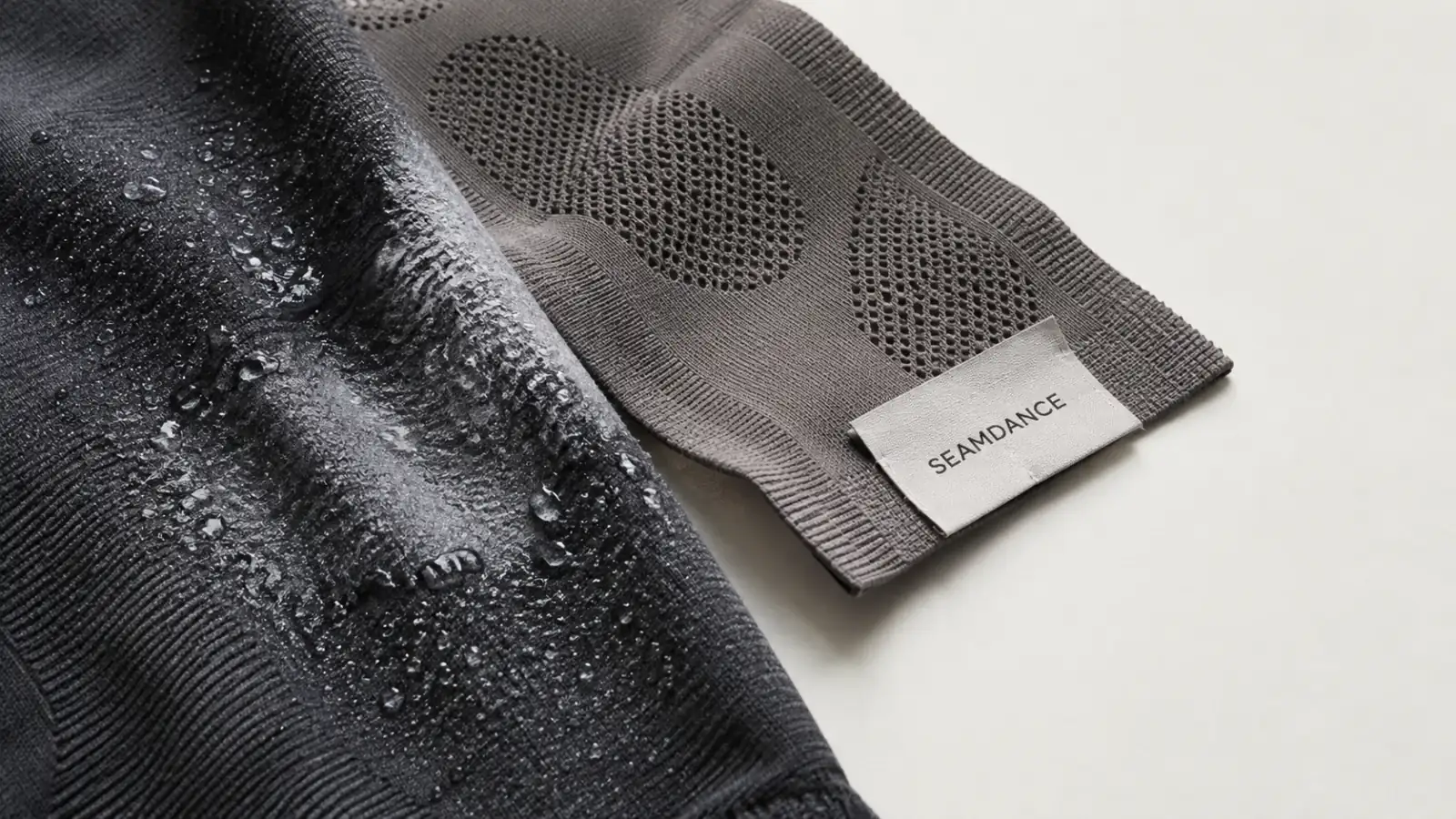
“Moisture-wicking and breathable” is printed on everything, which makes it mean nothing. Underneath the label are real, testable mechanisms — fiber choice, yarn cross-section, knit structure and zoning — that decide whether a customer finishes class dry or clammy.
How wicking actually works
Wicking is capillary action: moisture moves along fiber surfaces and through the spaces between yarns, spreading so it can evaporate. Polyester's hydrophobic surface moves moisture without absorbing it; shaped cross-sections increase surface channels; fine filaments multiply them.
Nylon absorbs slightly more moisture into the fiber itself, which softens the clammy feeling in low-sweat studio use — one reason yoga favors nylon while running favors polyester. Neither is “more breathable” in the abstract; they manage moisture differently.
Breathability is structure, not just fiber
Air moves through the gaps knitting leaves, so structure dominates: open mesh zones ventilate more than dense jersey regardless of fiber. Weight and density trade against airflow — another reason chasing gsm for opacity has a comfort cost.
Seamless construction turns this into design: ventilation mapped exactly where heat builds (underbust, back panel, behind the knee) while density stays high where opacity matters. It is one of seamless knitting's genuinely unique advantages.
Testing before claiming
Standard tests exist and are inexpensive: vertical wicking (how far moisture climbs a strip), drying-rate tests, and air-permeability measurements. Run them on the actual production fabric — finishing treatments can change results.
Durable wicking is the honest question: some wicking finishes wash out over cycles, while fiber- and structure-based performance persists. Ask which mechanism your fabric relies on, and wash-test before printing claims a regulator or a review section can falsify.
Briefing moisture management by end use
Hot yoga and HIIT deserve the full treatment: wicking-optimized fibers, ventilation zoning, lighter density. Studio flow cares more about hand feel with adequate management. Athleisure barely needs it — do not pay for performance the customer will never sweat into.
At SEAMDANCE, moisture-management targets are set per program brief and verified with fabric test reports during material approval, so the label claim and the fabric agree before bulk.
Quick answers
Is cotton always wrong for activewear?
For sweat-heavy performance, yes — it absorbs and holds moisture. For athleisure and studio-to-street layers, cotton blends are legitimate and customers like them; match the fiber to the actual use.
Do wicking finishes wash out?
Topical finishes can fade over wash cycles; structural and fiber-based wicking persists. Ask which your fabric uses and check the test report after laundering.
Sourcing styles for your line? The 2026 catalogue lists every ready-to-develop style — colorways, materials, quote list built in.