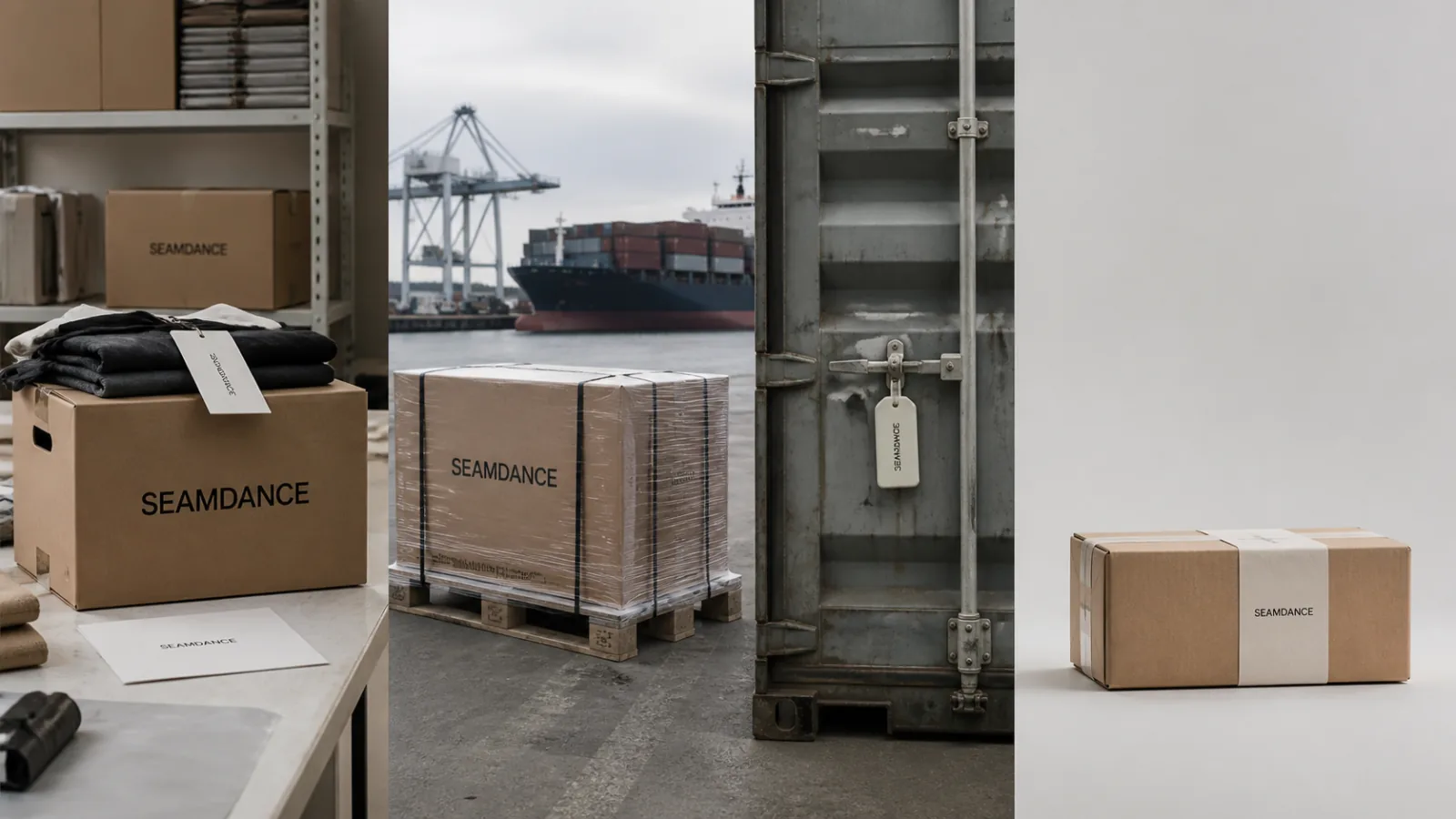
Incoterms are three-letter answers to two expensive questions: who pays for which leg of the journey, and where does risk transfer. Misreading them is how a “cheaper” quote becomes the dearest landed cost on the spreadsheet.
The four terms buyers actually meet
EXW (Ex Works): you take over at the factory door — every cost and risk from there is yours, including export clearance. Cheapest number on the quote, most work for you. FOB (Free On Board): the supplier delivers export-cleared goods onto the vessel at the origin port; you own the ocean leg onward. The workhorse of apparel trade.
CIF adds ocean freight and minimum insurance to the destination port — but note: risk still transfers at origin loading, a nuance that surprises people at claim time. DDP (Delivered Duty Paid): the supplier delivers to your warehouse with duties paid — maximum convenience, least visibility into the cost stack.
Where the hidden costs sit
Comparing an EXW price to an FOB price is comparing different products: origin trucking, export clearance and port charges sit between them. DDP quotes bundle freight, duty and brokerage at the seller's rates — convenient, but you cannot see whether each line is fair.
The clean comparison method: ask every supplier for the same term (FOB origin-port is the common denominator), then price the onward legs once with your own forwarder.
Which term at which stage
First orders and small brands: FOB with a freight forwarder you appoint is the balanced answer — the supplier handles the origin bureaucracy they know, you control the international leg and learn your true landed cost. DDP is defensible for very small parcel-size programs where simplicity outweighs cost opacity.
As volume grows, staying on FOB with negotiated freight contracts usually beats DDP pricing, and consolidated shipments amplify the gain: SEAMDANCE's multi-category consolidation exists partly for this — one FOB shipment instead of four LCL fragments.
Risk, insurance and paperwork
Whatever the term, insure the goods for the legs you own — cargo insurance is cheap against the cost of a wet container. Confirm who produces which documents: commercial invoice, packing list, bill of lading, certificates of origin where duty preferences apply.
Write the Incoterm, the named place and the version year into the order (e.g. “FOB Xiamen, Incoterms 2020”) — the named place is half the meaning, and ambiguity is where disputes live.
Quick answers
Which Incoterm is best for a first order?
FOB origin port with your own forwarder, in most cases: fair division of labor, transparent costs, and you build the logistics knowledge every importer eventually needs.
Does SEAMDANCE handle logistics under any term?
Programs commonly run FOB with consolidation at origin; other terms are quoted case by case. Either way the shipment plan — and a 98% on-time record across the network — is coordinated as part of the program, not left as your problem after the factory gate.
Sources
What a remote brand needs from a China-side partner.
Open the programSourcing styles for your line? The 2026 catalogue lists every ready-to-develop style — colorways, materials, quote list built in.