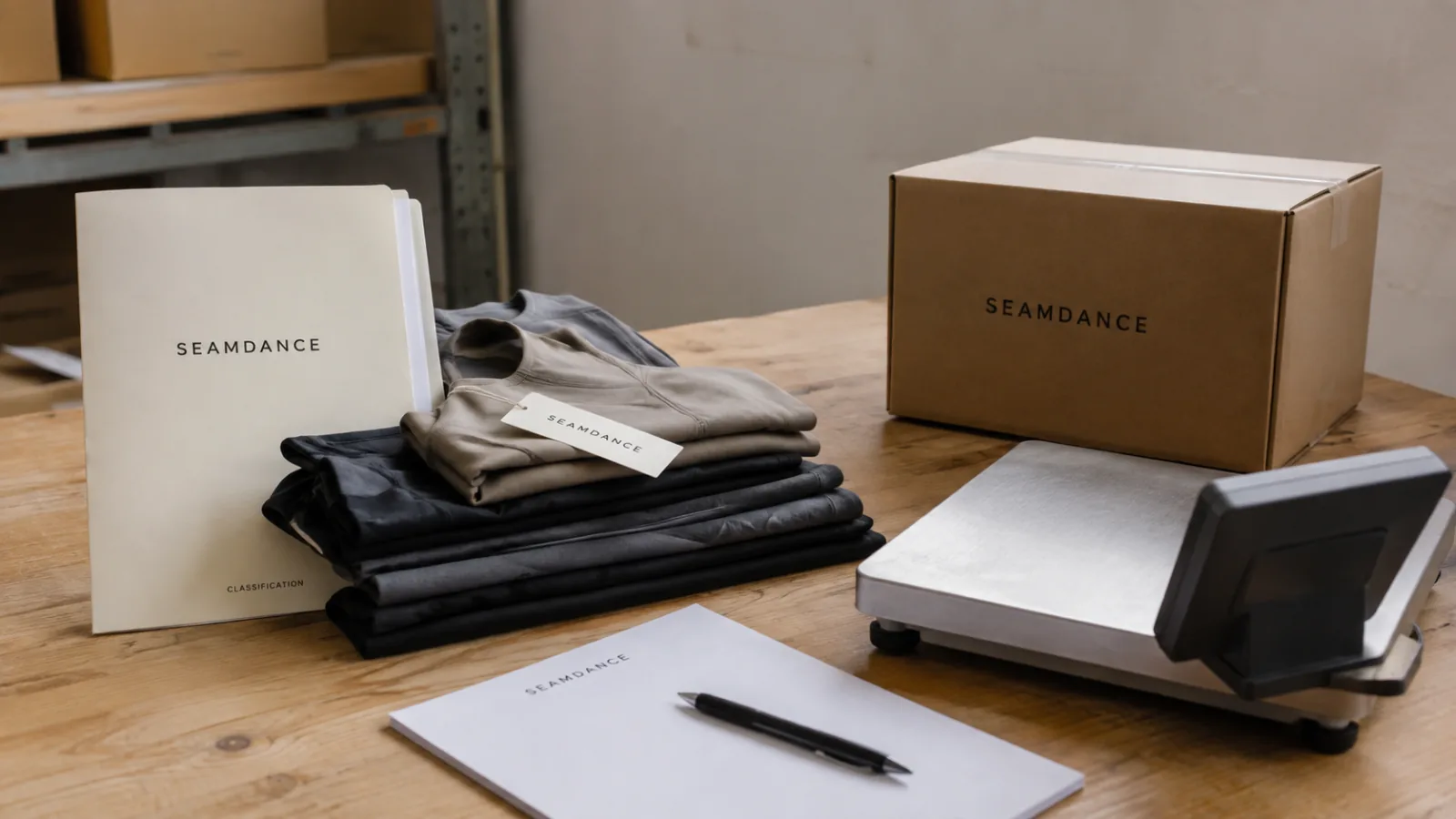
The unit price is not the price. Between the factory invoice and your warehouse sits a stack of duties, fees and freight that varies by product, fiber and destination — knowable in advance, ruinous when discovered late. This is orientation, not legal advice; your customs broker gives the binding answer.
HS codes: the number that sets the rate
Every garment imports under a Harmonized System classification, determined by real attributes: knit vs woven, fiber content, gender, garment type. Duty rates differ meaningfully between codes — synthetic knit activewear typically carries double-digit duty rates in the US, while some destinations and trade agreements sit far lower.
Fiber content drives classification, which is one more reason the label, the invoice and the actual fabric must agree. Misclassification — accidental or 'optimistic' — invites reassessment, penalties and shipment holds.
How the landed cost actually stacks
Landed cost = goods + freight + insurance + duty (calculated on customs value, in the US typically the goods' transaction value) + destination fees: brokerage, port and handling charges, possible additional tariffs by origin, and in many markets import VAT/GST — often reclaimable for registered businesses, but real for cash flow.
Build the model once per product in a spreadsheet: at typical activewear duty rates plus freight and fees, a rough planning multiplier of 1.2–1.4× ex-factory is common — verify your own lanes and rates rather than borrowing anyone's number, including that one.
Paperwork that keeps customs boring
The set: commercial invoice (accurate values and full product descriptions), packing list, bill of lading, and origin documentation where preferences apply. Consistency is the whole art — quantities, values, fiber contents identical across documents and physical labels.
Undervaluing invoices to save duty is the oldest bad idea in importing: penalties, seizure risk, and a poisoned importer record. Brands that intend to scale — or ever be acquired — keep this clean from order one.
Where your supplier helps, and where they cannot
A competent supply-chain partner produces clean, consistent export documents, correct labeling (fiber content, origin, care), and consolidated shipments that clear as one entry — SEAMDANCE programs ship with the document set matched to the destination's needs. What no supplier can do is be your importer of record: duty planning and final classification live with you and your broker.
The efficient division: we make the paperwork boring, your broker makes the classification binding, and your spreadsheet knows the landed cost before you approve the program — not after the container lands.
Quick answers
Who pays import duty?
The importer of record — normally you, the brand — except under DDP terms where the seller prices it in. Either way the money comes from your margin; the only question is visibility.
Can I find duty rates myself?
Yes — official tariff databases (e.g. the US HTS) are public. Look up candidate codes for orientation, then confirm classification with a broker before relying on it.
Sources
Duty treatment, compliance and approval rhythm from a buyer market away.
Open the programSourcing styles for your line? The 2026 catalogue lists every ready-to-develop style — colorways, materials, quote list built in.