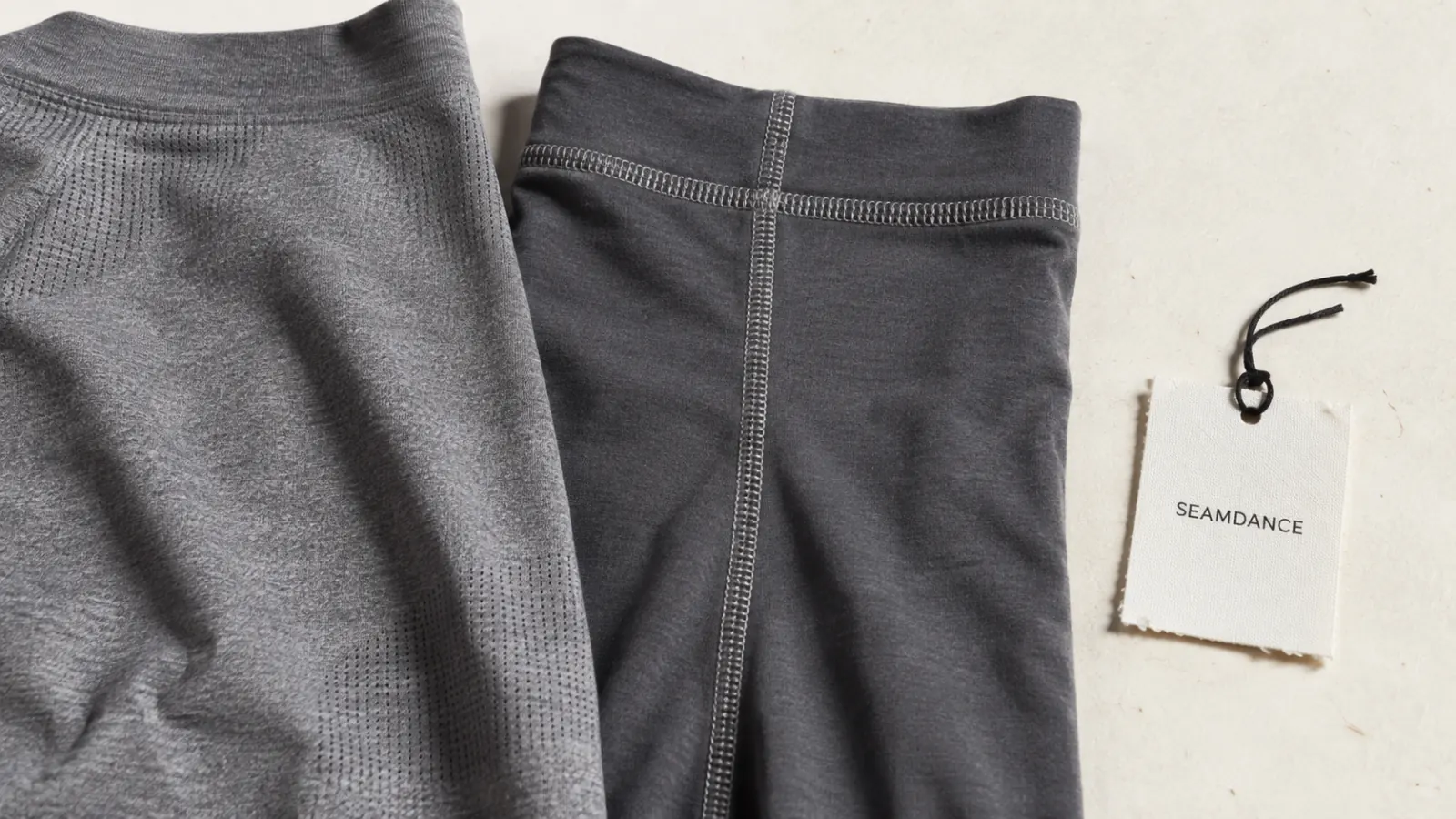
Almost every supplier that answers an activewear enquiry calls itself a manufacturer. Behind that one word sit very different businesses. One knits fabric and never sews it. One buys fabric and sews the garment. One only sews what you send it. One runs seamless knitting machines. Some make nothing at all. Each type does one job well and is the wrong choice for others, and the type also decides who pays when fabric arrives short or a lot comes back off-shade. This guide sets out the eight types an activewear buyer meets, what each can and cannot do, and the documents that tell them apart.
The short answer
- An activewear supplier is usually one of eight types: a fabric mill, a vertical manufacturer, a full-package cut-and-sew factory, a CMT (cut, make, trim) factory, a seamless knitting factory, a specialist factory for swim, moulded-cup bras or bags, a trading company, or a sourcing agent. Five of them make garments.
- The type decides who carries which risk. A full-package factory buys the fabric and answers for it. Under CMT you buy the fabric, so a short delivery or a faulty roll is your problem. A trading company is responsible for the order but runs no production line.
- Tell them apart with documents, not photographs: the business scope in China's National Enterprise Credit Information Publicity System, the address on each audit and facility certificate, and, for US imports, the manufacturer identification code, which is built from the name and address of the factory that did the origin-conferring work.
Eight types, side by side
The word manufacturer covers too much to be useful on its own. The table sorts suppliers by what they physically do and what they sell you. A real company can sit in two rows: plenty of factories export through a separate trading company, and some groups own a mill and a sewing plant under different licences. Read the rows as roles, then ask which role each company plays in your order.
The question that sorts them fastest is what the price is for. A price per metre or per kilo is a mill. A price per piece including fabric is full package. A price per piece for labour only is CMT. A margin on someone else's piece price is a trading company, and a commission or fee on top of the factory's invoice is an agent.
The eight types of activewear supplier
| Type | What it does | Good for | Not the place for | What you buy from it |
|---|---|---|---|---|
| Fabric mill | Knits, dyes and finishes fabric | Fabric development, lab dips, fabric test reports | Sewing garments | Fabric by the metre or kilo |
| Vertical manufacturer | Makes fabric and sews garments in one group | One party answering for fabric and garment | Fabrics outside its own range | Finished garments on its own fabrics |
| Full-package cut-and-sew factory | Buys fabric and trims to your specification, then cuts, sews, finishes and packs | Leggings, bras, tees, shorts and sets in cut panels | Constructions its machines do not run | Finished garments, fabric included |
| CMT factory | Cuts, makes and trims with fabric you supply | Buyers who already buy fabric themselves | A first order without your own fabric supplier | Labour per piece |
| Seamless knitting factory | Knits garments close to their final shape on circular seamless machines | Seamless leggings, bras and sets | Woven jackets, multi-fabric cut panels | Seamless garments |
| Specialist factory | Runs one construction family: swim, moulded-cup bras or bags | Categories that need their own machines and materials | Categories outside its specialty | Finished goods in that category |
| Trading company | Buys from factories and resells at a margin; runs no line | Breadth, one counterparty, mixed shipments | Machine-level answers or facility certificates of its own | Goods made by someone else |
| Sourcing agent | Acts for the buyer: finds suppliers, relays specifications, inspects, arranges shipping | Buyers who want someone on the ground | Production; it owns no lines and does not resell | A service, paid by commission or fee |
1. Fabric mill
A mill knits greige fabric on circular knitting machines, then dyes and finishes it, or sends it to a dye house that does. It sells fabric. It does not sew. You meet a mill when you nominate a fabric, approve a lab dip, or read a fabric test report that was issued to the mill rather than to you.
Almost no activewear sewing factory dyes its own performance fabric, and that is normal. What matters is that your garment supplier can name the mill and tell you what happens when a lab dip fails twice. Two mill habits are worth knowing. A construction sheet usually gives the blend the mill intends to knit, not a tested result. And each custom shade carries its own dye-lot minimum, which is why a range with eight custom colours costs more to start than one with three.
2. Vertical manufacturer
A vertical manufacturer knits or dyes fabric and sews garments inside one group. The appeal is obvious: shade, shrinkage and fabric delivery are one company's problem, and nobody can blame the mill.
The limit is the fabric range. You are buying that group's fabrics, so a base it does not knit means an outside mill anyway. Check the addresses too. A group can be vertical on its brochure and still knit in a separate company at another address. Facility certificates and social audits attach to one production site [2][3], so ask which site does which process and match each certificate to that address.
3. Full-package cut-and-sew factory
This is what most buyers mean by a garment factory. It buys fabric and trims to your specification, cuts, sews, presses, inspects and packs, and quotes one price per piece with fabric included. Most cut-and-sew leggings, sports bras, tees, shorts and sets are made this way.
The advantage is a single price and a single party answering for fabric shortfalls, shading between rolls and shrinkage. The limit is equipment. Activewear seams need flatlock (flatseamer) and coverstitch machines; a line set up for woven shirts can sew a legging but not well. Ask for the machine register and the fabric inspection records before you ask for a price. A factory that checks incoming fabric for faults, weight and shade before cutting catches problems while they are still the mill's.
4. CMT factory
CMT stands for cut, make, trim. You supply the fabric, and often the trims; the factory charges for labour. It suits a brand that already buys fabric directly, or one that must use a nominated fabric across several sewing factories.
The risk moves to you with the fabric. If it arrives short, if rolls differ in shade, if it shrinks before cutting or a fault shows up on the cutting table, the factory is not liable unless the order says so. Agree the fabric consumption per piece, the allowance for cutting loss and who pays for a re-cut before the fabric ships. For a first order, without an existing fabric supplier, we would not start with CMT: it adds a contract and a failure point you do not need yet.
5. Seamless knitting factory
A seamless factory knits each garment as a tube, close to its final shape, on circular seamless machines, then finishes it with a few seams. Support zones, rib and mesh are knitted in rather than sewn in. A factory either owns its seamless machines or sends the knitting out, and the machine count, cylinder size and gauge are the quickest checks of which one you are dealing with.
Seamless has its own limits. The machine's cylinder size and gauge set what the knit can be: a finer gauge holds a cleaner surface, a coarser one runs faster and costs less per piece. A design built from panels in different fabrics is a cut-and-sew job. Seamless also changes origin rules for US imports: where knitted-to-shape parts form half or more of the exterior surface, origin generally follows the country where the knitting happened, while cut-and-sew garments take the country where they were wholly assembled [4]. Settle origin before the labels are printed.
6. Specialist factory: swim, moulded-cup bras, bags
Some categories need machines and materials a legging line does not have. Swimwear uses chlorine-resistant fabrics and its own testing. Moulded-cup bras need cup-moulding machines, and often bonding machines as well. Bags are made from webbing, foam and hardware. A factory that is excellent at one of these is usually ordinary at the rest.
Specialists are where a range quietly splits. A maker strong in leggings may list skorts or swim on its website and subcontract them. Ask which items are sewn on its own floor, at which address, and keep that answer in the order file.
7. Trading company
A trading company buys finished goods from factories and resells them at a margin. It runs no production. That is a legitimate business: it gives you one counterparty across several factories, consolidates shipments, and can hold the relationship when you do not have staff in China.
What a trading company cannot do is lend you the factory's credentials. A STeP certificate covers a production facility [2] and an amfori BSCI audit covers one site [3]; neither travels to the company that invoices you. Customs sees through the layer too. For US textile and apparel entries, the manufacturer identification code is built from the name and address of the entity that performed the origin-conferring operations [5], so the factory's name reaches CBP whoever sells you the goods. The problem is never the layer itself. It is a layer that is not disclosed.
8. Sourcing agent or buying office
An agent works for the buyer. It finds suppliers, relays specifications, collects samples, inspects goods, places orders and arranges shipping for the importer [6]. It does not resell the goods. The factory invoices, and the agent is paid separately, by commission, fee or retainer.
Ask how the agent is paid, on what base, and whether any factory pays it as well. Get the answer signed before work starts. An agent adds eyes on the ground; it does not add production capacity, and it cannot answer for a lot it did not make.
How to tell them apart from documents
Photographs prove that a factory exists somewhere. Documents connect a company to a site and a process. Use the checks below together; each one alone has a gap.
Start with the business scope. In China, the National Enterprise Credit Information Publicity System shows each company's registered scope [1], which usually tells you whether it is registered to manufacture or only to trade. Many genuine factories export through a separate trading arm, so a trading scope on the contract is a reason to ask which factory sews, not a reason to walk away.
Then match addresses. The address on the social audit, the facility certificate and the inspection booking should be the address where your goods are made. If they differ, ask why before the deposit.
Last, the machine questions. A supplier that owns the process answers cylinder count, seam machines and elastic tension control on the spot. Our factory-versus-trading-company guide, linked below, sets out five of those questions and what a real answer sounds like.
Where SEAMDANCE sits
SEAMDANCE publishes this page, so here is our own row, stated the same way. Our own factory in Xiamen handles pattern development and sampling, seamless knitting, sewing, pressing, inspection and packing for leggings and yoga pants, sports bras, short-sleeve tees, shorts, sets, seamless styles and jackets. Cut-and-sew fabrics are knitted and dyed by our partner mills. The rest of a range is covered by our one-stop service under the same quality standard, and we name the factory for your order.
Our own factory welcomes visits by appointment and live video walk-throughs on request. Certificates are provided for the order by the factory or mill that holds them; we verify the holder, scope and validity before the order is placed. No certification is claimed for SEAMDANCE or its own factory.
Quick answers
What are the main types of clothing manufacturers?
Fabric mills, vertical manufacturers, full-package cut-and-sew factories, CMT factories, seamless knitting factories and specialist factories make fabric or garments. Trading companies and sourcing agents do not make anything; they resell or act for the buyer.
What is the difference between CMT and full package?
Under full package the factory buys the fabric and trims and quotes one price per piece. Under CMT you supply the fabric and pay the factory for cutting, sewing and trimming, so fabric shortages, shading and faults are your risk unless the order says otherwise.
Is a vertical manufacturer better for activewear?
Only if its own fabrics suit your range. It puts fabric and garment under one party, which helps with shade and shrinkage, but a base it does not knit still comes from an outside mill.
How can I tell whether a supplier is a factory or a trading company?
Check the registered business scope in China's National Enterprise Credit Information Publicity System, then match the address on its audits and certificates to the site that will sew your order. Ask machine-level questions too; a party that runs the line answers them without fetching the answer.
Can a trading company hold certificates for the factories it buys from?
No. Facility certificates such as OEKO-TEX STeP and social audits such as amfori BSCI belong to the production site that was certified or audited. A trading company can pass on the factory's documents, and those documents should name the factory.
Does a seamless factory also make cut-and-sew garments?
Some run both, often on different floors or at different addresses. Ask which construction runs on which machines and where, because the answer also affects US country of origin: knit-to-shape garments generally take the country where they were knitted.
Sources
- Shanghai Administration for Market Regulation, via english.shanghai.gov.cn — FAQs: Shanghai's market access policies, 19 March 2024 (what the National Enterprise Credit Information Publicity System shows)
- OEKO-TEX® STeP — certification for facilities in textile and leather production
- amfori BSCI — how the system works, starting from the amfori BSCI Code of Conduct
- 19 CFR 102.21 — Textile and apparel products: the origin sequence and the definitions of knit to shape, major parts and wholly assembled (eCFR, checked 18 September 2026)
- eCFR — 19 CFR 102.23, Origin and manufacturer identification (textile and apparel entries must identify the manufacturer that performed the origin-conferring work)
- GOV.UK, HM Revenue & Customs — Accounting for buying commission in the customs value (what a buying agent does for an importer)
Five machine-level questions that separate a party who runs the line from one relaying answers.
Open the programSourcing styles for your line? The 2026 catalogue lists every ready-to-develop style — colorways, materials, quote list built in.